.avif)
Food manufacturers use food assembly robots to address labor shortages, increase throughput, improve consistency, and reduce giveaway. What many people don’t realize is that these same benefits also help food manufacturers reduce carbon emissions.
The food industry is among the largest producers of carbon emissions in the world. Food loss and waste alone account for roughly 8-10% of all global emissions. When food is thrown out, the emissions from growing, processing, and transporting it are wasted, too, and most of it ends up in landfills, where it releases methane, a greenhouse gas about 80 times more potent than CO₂ over 20 years.
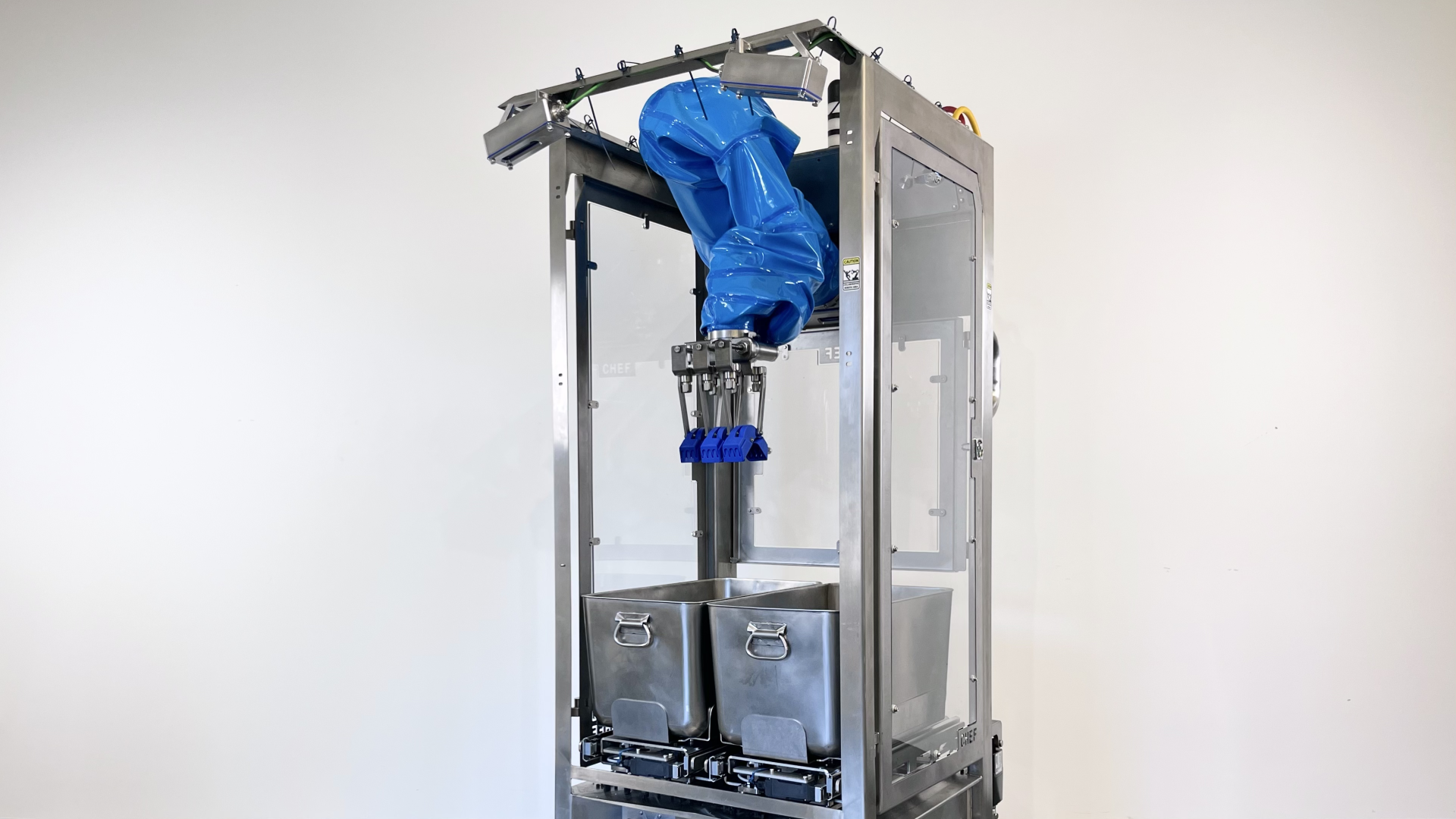
When automating the food assembly process, food manufacturers use robots to perform the otherwise manual tasks of scooping or picking and placing different food ingredients into meal trays. These robots help reduce carbon emissions in four ways:
1. Reduced giveaway
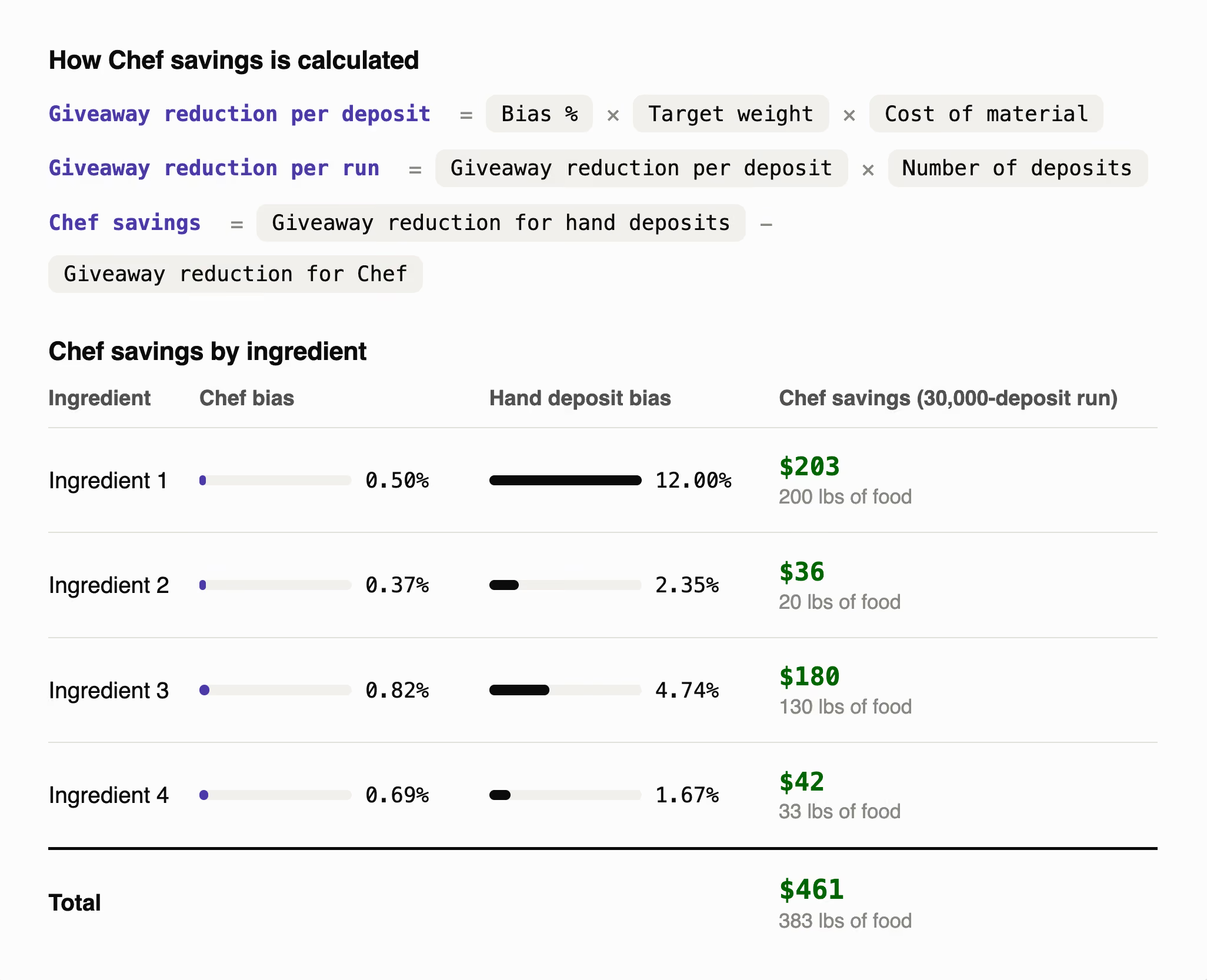
Regulations require the food in each tray to match its label, so production line workers often over-portion ingredients to avoid underweight meals, effectively giving food away for free. Meal assembly robots use sensors and control loops to consistently hit target weights while minimizing giveaway. By reducing giveaway, manufacturers can produce the same number of meals with a smaller amount of ingredient. That means ordering less inventory, growing and processing less food, and reducing the carbon emissions generated throughout the food production supply chain. For one production run involving 30,000 deposits, two Chef robots saved a customer between $36 and $203 in ingredient costs, depending on the ingredient (see Figure 1). At scale, those savings result in meaningful reductions in the amount of food that needs to be produced in the first place.
2. Higher consistency
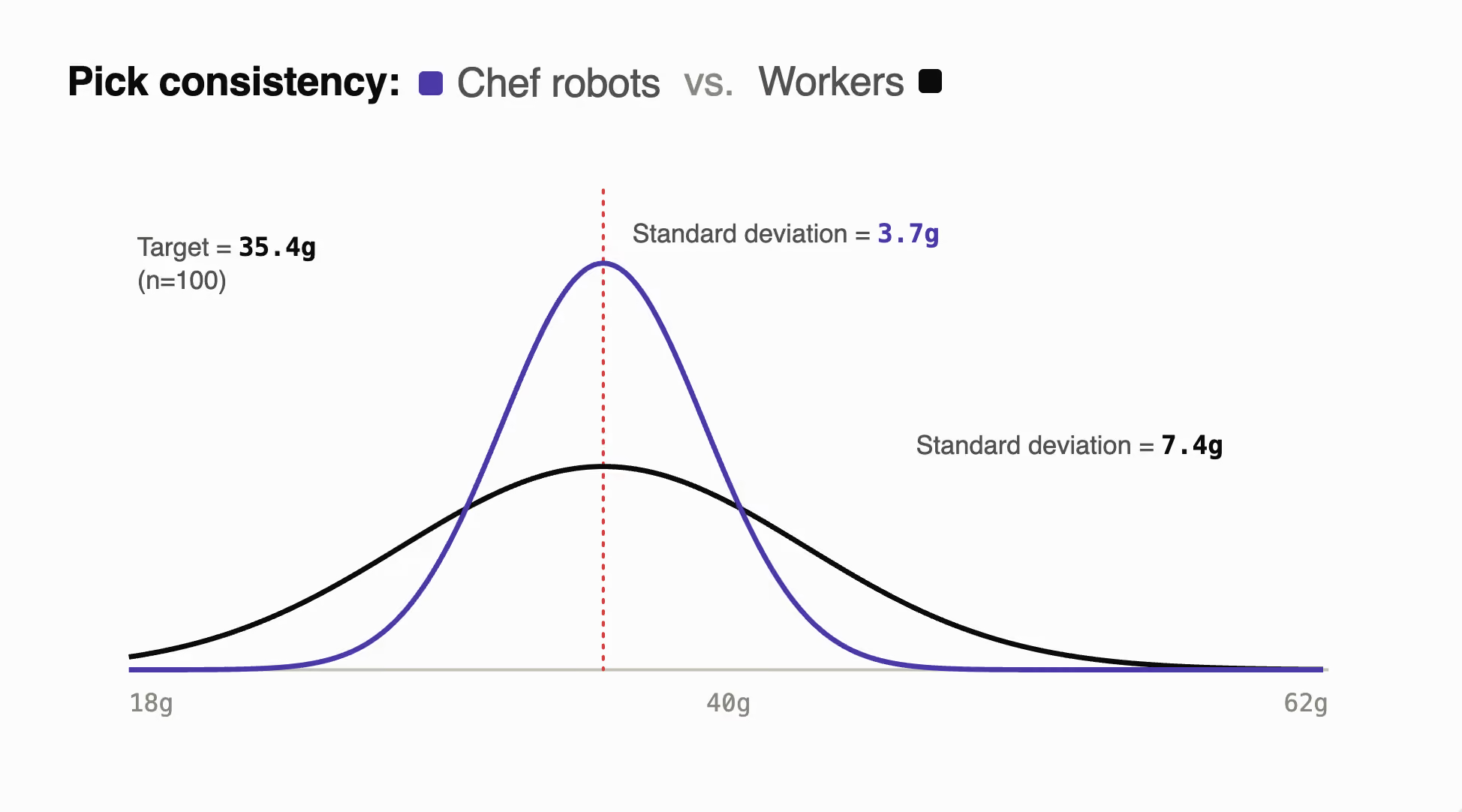
Chef robots portion with far less variation than workers. Across 50,000+ trays per production line each day, that tighter standard deviation translates to meaningful reductions in wasted food, both through reduced giveaway (as explained above) and by avoiding meals that are underweight and must be discarded because they can’t be sold. Figure 2 shows the standard deviation a customer has observed for Chef robots compared to workers for a particular ingredient.
3. Spillage
Chef robots spill less than manual food assembly, reducing ingredient waste and the amount of food manufacturers need to produce to meet demand. Similar to reduced giveaway, less spillage means that manufacturers need less of each ingredient to meet demand, reducing overall food production and the emissions that come with it.

4. Less waste from mid-run shortages
Giveaway doesn’t just waste the over-portioned ingredient, it can sabotage an entire run. If workers over-deposit a particular ingredient over the first seven hours of a shift, the supply runs dry before the run is complete. At that point, the remaining trays can’t be finished, and every other ingredient already staged for them is thrown out, too. A single early overage cascades into tons of wasted food. Because Chef robots portion every pick to spec, ingredient inventory lasts throughout the production run, reducing food waste and associated carbon emissions that result from incomplete production runs.
By reducing giveaway, improving consistency, minimizing spillage, and preventing food waste, Chef robots help food manufacturers lower both operating costs and carbon emissions. If you’d like to learn more, get in touch with our team.