If you've ever tried to neatly scoop a portion of lentil daal into a small compartment of a meal tray without any sauce spilling into the neighboring rice compartment, or sprinkle shredded cheese into a small, clear insert on top of a chicken caesar salad bowl, you know it’s trickier than it looks. Now imagine doing this dozens of times per minute for eight hours straight with perfect consistency, while keeping the tray edges spotless for sealing.
This is the reality that many food manufacturers face today, especially those producing fresh ready-to-eat salads or ready-to-heat meals with multi-cavity trays and inserts. Placing ingredients into large bowls with a single compartment is relatively simple. But portioning ingredients into multiple compartments or lose, clear inserts is tedious, and even trained workers struggle to maintain both speed and precision throughout a shift.
Why are small compartments and inserts difficult?
Compared to regular meal trays with one or two large compartments, trays with small cavities or inserts can cause a number of challenges during meal assembly:
- Precision: Compartments might be as small as a matchbox. There’s no room for error.
- Aesthetics: Manufacturers have strict requirements regarding ingredient migration between cavities. The meals also need to meet visual quality standards.
- Complex geometries: Compartments might be triangular or irregularly shaped, while inserts might be tilted, skewed, or rotated. Clear inserts are especially hard to see on a fast-moving production line.
- Speed: Despite the above challenges, food manufacturers can’t afford to reduce throughput rates.
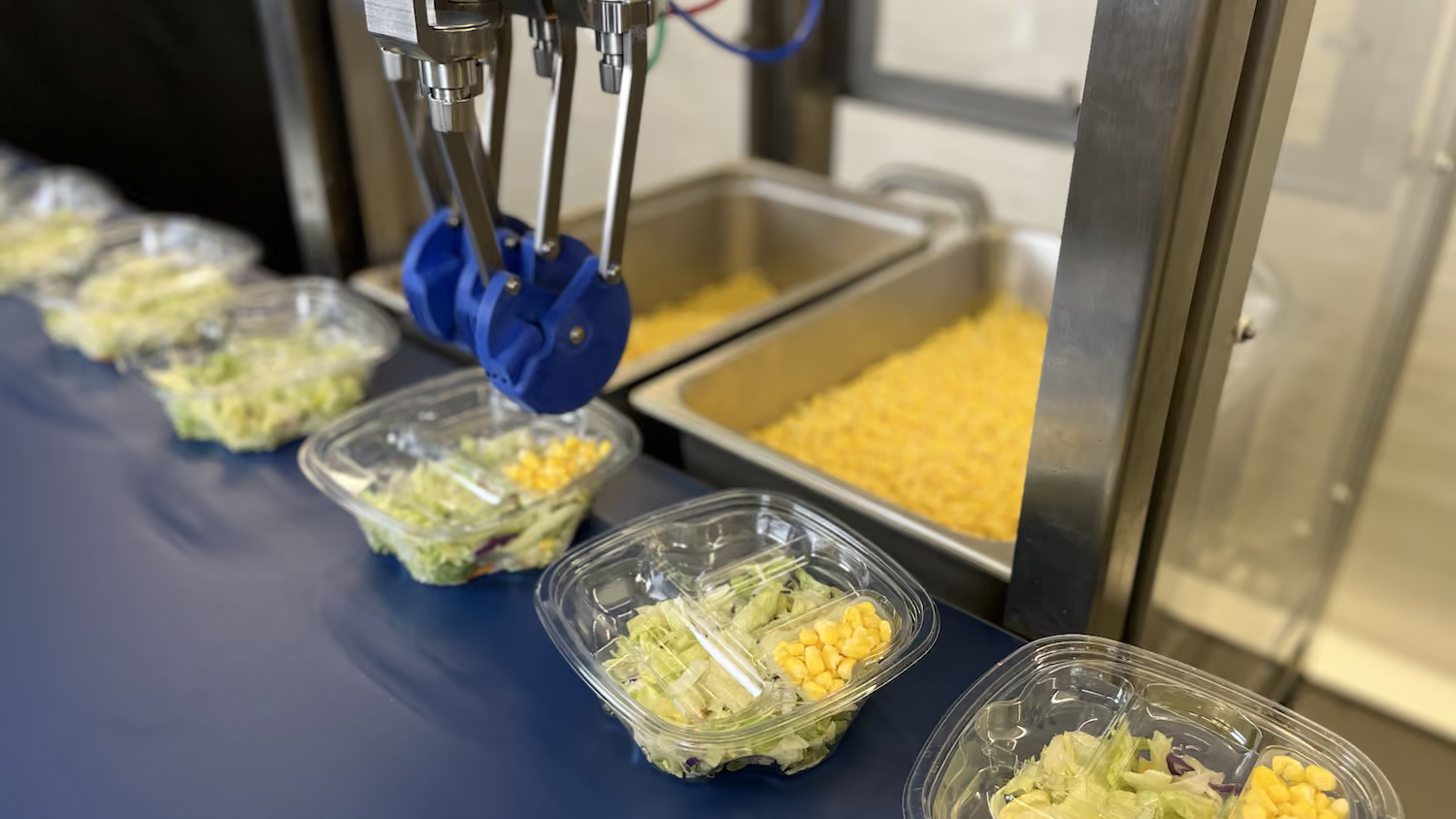
To solve these challenges, we’ve developed specialized tooling that lets food manufacturers automate portioning across various tray types, including those with small cavities.
Specialized shielded utensils
Specifically designed for small cavities and inserts, our shielded utensils feature walls that prevent ingredients from spilling into adjacent compartments. They work with both solid ingredients like diced chicken, chopped peppers, and shredded cheese, and chunky, saucy items, such as chicken curry and beef birria. The utensils are designed to scoop ingredients cleanly from the pan, deposit them precisely into the target compartment, and keep the tray edges clean for proper sealing. They need to be small enough to fit within a cavity without touching its walls, yet large enough to pick up the target ingredient weight. Chef’s engineering team has validated this balance across different compartment and insert shapes and sizes, including triangular and irregular shapes.
AI-powered vision and adaptability
In addition to precise tooling, we have developed a deep learning vision model that simultaneously detects the bowl along with its cavities and inserts, enabling Chef robots to deposit ingredients quickly and accurately.
This is what it looks like in practice: First, our engineering team collects the dimensions of each tray. Once the tray dimensions are entered into our software, we specify offsets from the tray center for each compartment and insert. During meal assembly at a food manufacturing facility, the vision system detects each tray’s compartments or inserts and determines their positions and orientations on the production line. It also recognizes when inserts are misaligned—tilted, skewed, or rotated—and adjusts ingredient placement accordingly.
What this means for food manufacturers
For food manufacturers, the ability to precisely place ingredients into small cavities and inserts within a meal tray at regular production speed opens up capabilities that were previously difficult to scale. High-mix manufacturing with several SKU changeovers becomes easier to coordinate, and quality control is more predictable when every meal looks consistent, whether it’s assembled at the start or end of a shift.
Several Chef customers are already using our robots to place ingredients into small cavities and inserts. For example, Cafe Spice has increased output by 2-3x by placing chicken curry into small cavities without spillage.
What’s next?
Food manufacturers don’t require any retrofitting or additional infrastructure to start using Chef’s shielded utensils and AI-powered vision system. To learn how Chef’s AI-enabled robots can automate your meal production, request a demo or contact our team at sales@chefrobotics.ai.
.png)
.avif)