While many of us are familiar with software as a service (SaaS), robotics as a service (RaaS) is still a relatively new concept for many companies. This blog explores what RaaS is, why it can be a beneficial business model for physical AI companies and their customers, and how RaaS has been reshaping automation in the food industry.
Key takeaways
- RaaS is a business model that lets physical AI companies offer their technology as a subscription or lease, similar to software AI tools, rather than requiring a large upfront capital expenditure (CapEx).
- The RaaS fee covers software and hardware updates, ongoing maintenance, and end-to-end support, so that customers always have access to the latest technology without unexpected costs. Just like AI software tools improve daily, so too do RaaS products.
- Many industries have started adopting the RaaS business model, from logistics and warehouse fulfillment to industrial production. The model has also shown success in food manufacturing, where traditional automation solutions are often too rigid to deal with the variability of real food ingredients.
- In the food industry, the RaaS business model is specifically useful for high-mix meal production. Because food ingredients are organic and thus extremely variable, and high-mix manufacturers change their meals and ingredients frequently, substantially more software and AI are required to meet a high-mix manufacturer’s automation needs, compared to traditional automation solutions that are well-suited for low-mix operations.
Challenges with traditional automation
Since their emergence in the early 1960s, traditional industrial robots have been hard-programmed for specific, repetitive tasks. Anything outside their programming requires human intervention. The traditional robotics business model reflects this rigidity: customers face large upfront hardware costs, ongoing maintenance, and expensive upgrades every time their needs change.
In food manufacturing, these traditional automation solutions work well for low-mix production, where food ingredients, recipes, menus, and meal trays undergo little to no change and production lines produce the same items every day, year-round. High-mix production, however, has been slower to adopt automation, as fixed systems don’t adapt well to frequent changeovers, menu changes, and variability in food ingredients.
The rise of physical AI
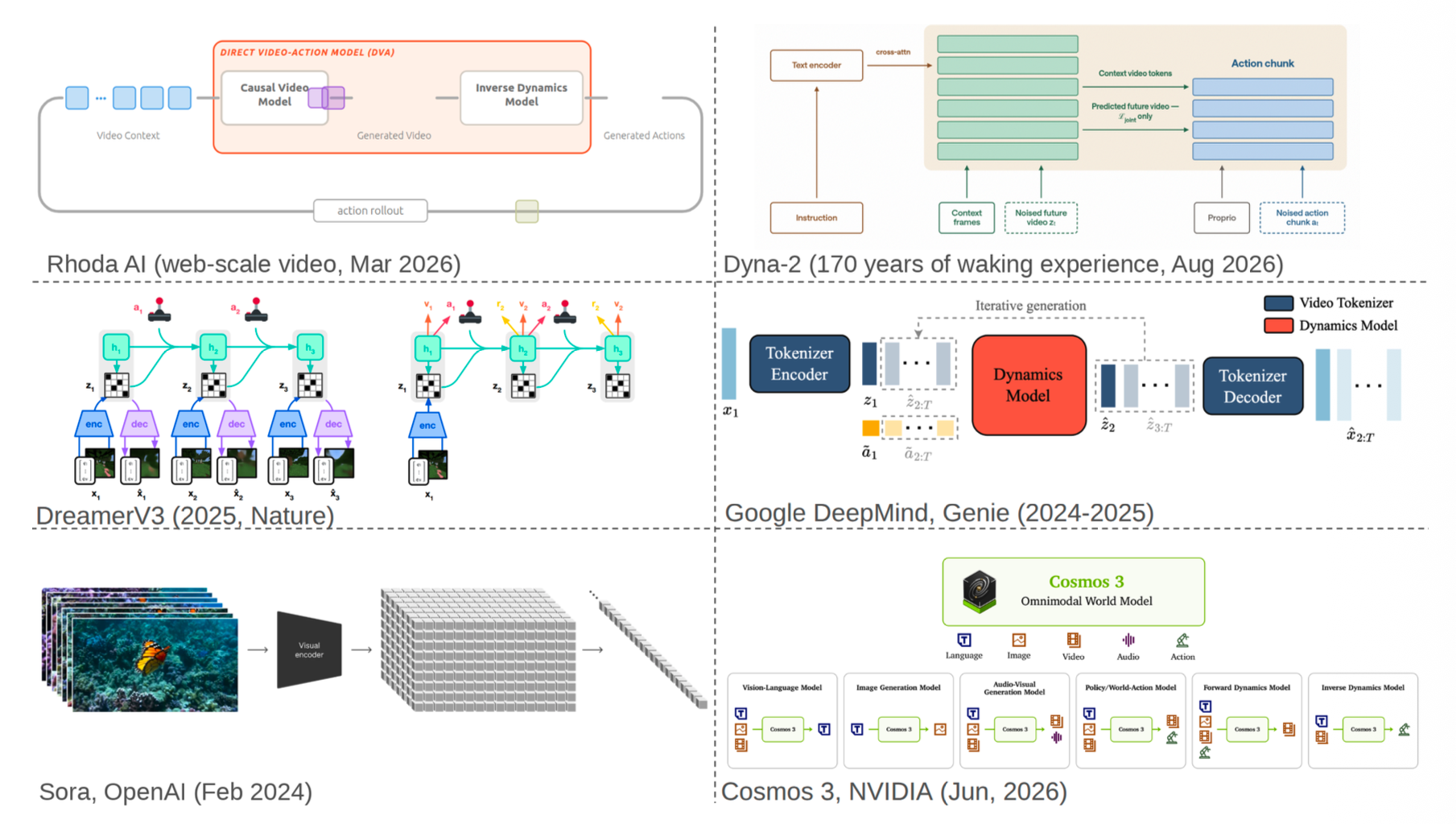
Just as LLMs sparked a wave of AI software subscriptions like ChatGPT, Claude, Perplexity, Cursor, and Midjourney, the rise of physical AI has led robotics companies to rethink their business models. Today, robots are no longer just hardware that periodically needs maintenance or replacement. The real differentiator is software: how capable a company’s AI models are and how quickly they improve. This focus on how well AI performs in the real world shifts value away from static hardware and toward the intelligence running it. A product that evolves continuously doesn’t fit a one-time hardware purchase model. RaaS was a natural result.
How RaaS works
RaaS works similarly to a SaaS subscription. Instead of purchasing a robot outright, customers pay a recurring fee to deploy and use robotic systems. This fee typically covers the hardware itself, software licenses, ongoing maintenance, uptime guarantees, and support, bundled into a single predictable operating expense (OpEx). Some customers like to think of RaaS companies like robot staffing agencies that provide robotic labor on demand without the overhead of ownership.
A typical RaaS solution works as follows: the robotics company assesses a customer’s production environment and use case, deploys the appropriate hardware, and handles installation and commissioning. From there, the customer operates the robots on their production floor, while the robotics company monitors performance remotely, pushes software updates, and provides ongoing support. If the customer’s needs change as they launch a new product line, onboard a new use case, or build a new facility, the solution adapts accordingly.
This model works especially well for physical AI companies because their robots are continuously learning and improving. Unlike traditional hardware that depreciates and becomes outdated, a RaaS robot gets smarter over time as the underlying AI models improve, making the overall solution more valuable the longer a customer uses it.
Benefits of RaaS
- Lower risk: Adopting a new automation solution can be daunting, especially if it requires a large CapEx investment before a single unit is produced. RaaS allows customers to start small with a lower financial commitment, prove value, and expand over time.
- ROI from year one: Traditional automation solutions often require lengthy engineering, integration, and commissioning work before a single robot is operational. RaaS solutions are designed to deploy quickly, getting robots up and running in days or weeks rather than months, so customers can start generating return on investment (ROI) within the first year. In food manufacturing, the largest drivers of ROI are labor, throughput, and giveaway.
- Flexible and scalable: RaaS subscriptions help customers scale the number of robots as their needs change, or reallocate robots from one production line or use case to another. While traditional robots are often guarded and bolted to the ground, RaaS companies often build collaborative robots (cobots) that can work safely alongside humans and be moved around the production floor as needed.
- Daily improvements and uptime: Because RaaS companies earn recurring revenue only when customers renew and expand, they are directly incentivized to maximize uptime, continuously improve performance, and tailor their products more closely to each customer’s operation over time.
- Future-proof: RaaS fees include maintenance, software updates, and hardware upgrades, so that customers don’t need to worry about their automation workflows becoming outdated or obsolete. As the underlying models improve, customers automatically gain access to the latest AI features without having to repurchase hardware. For physical AI products, software improvements (e.g., improvements to the perception system) often require hardware upgrades (e.g., a newer camera or GPU), making it especially valuable to have both covered under a single subscription.
How food manufacturers have adopted RaaS
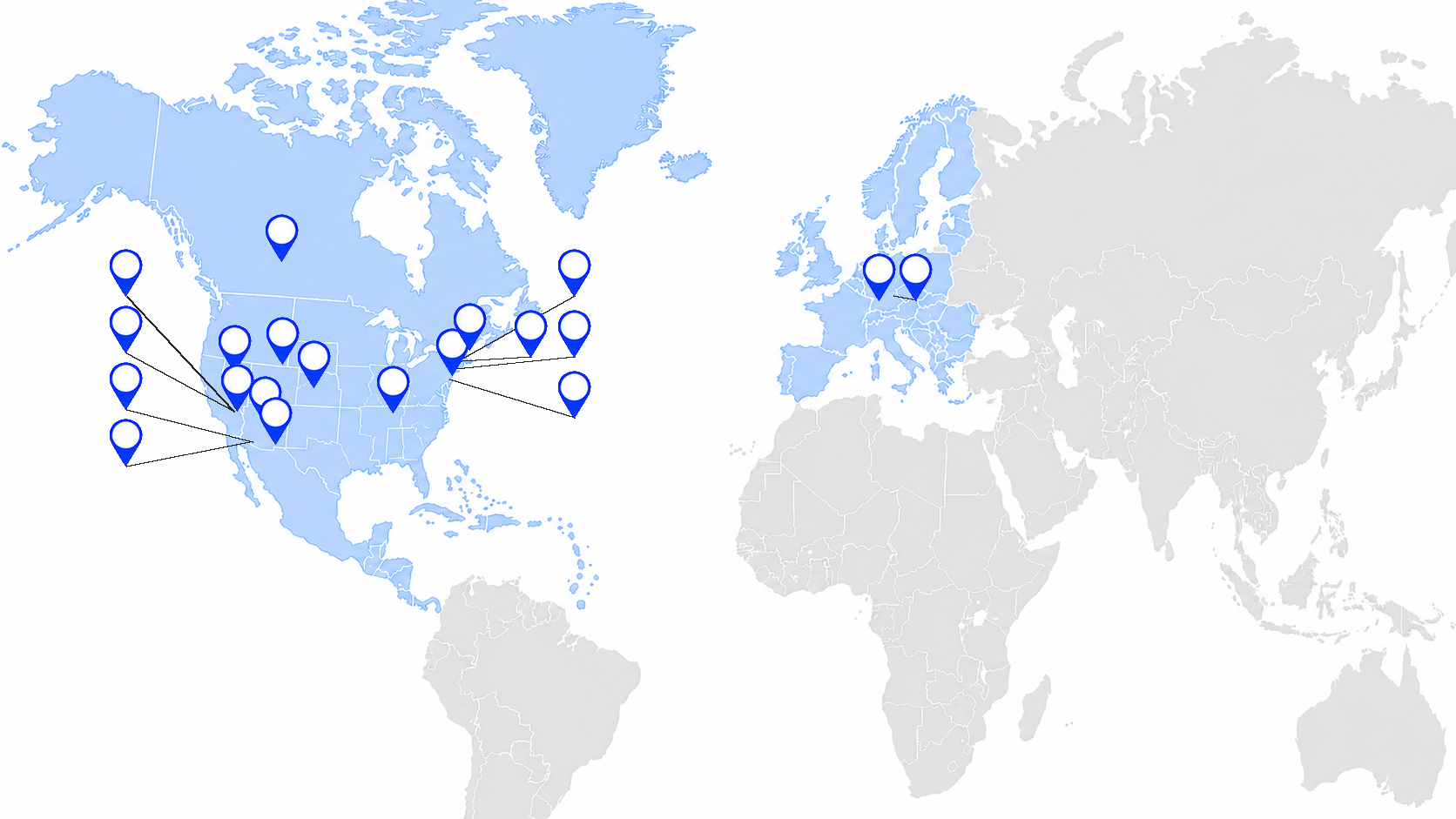
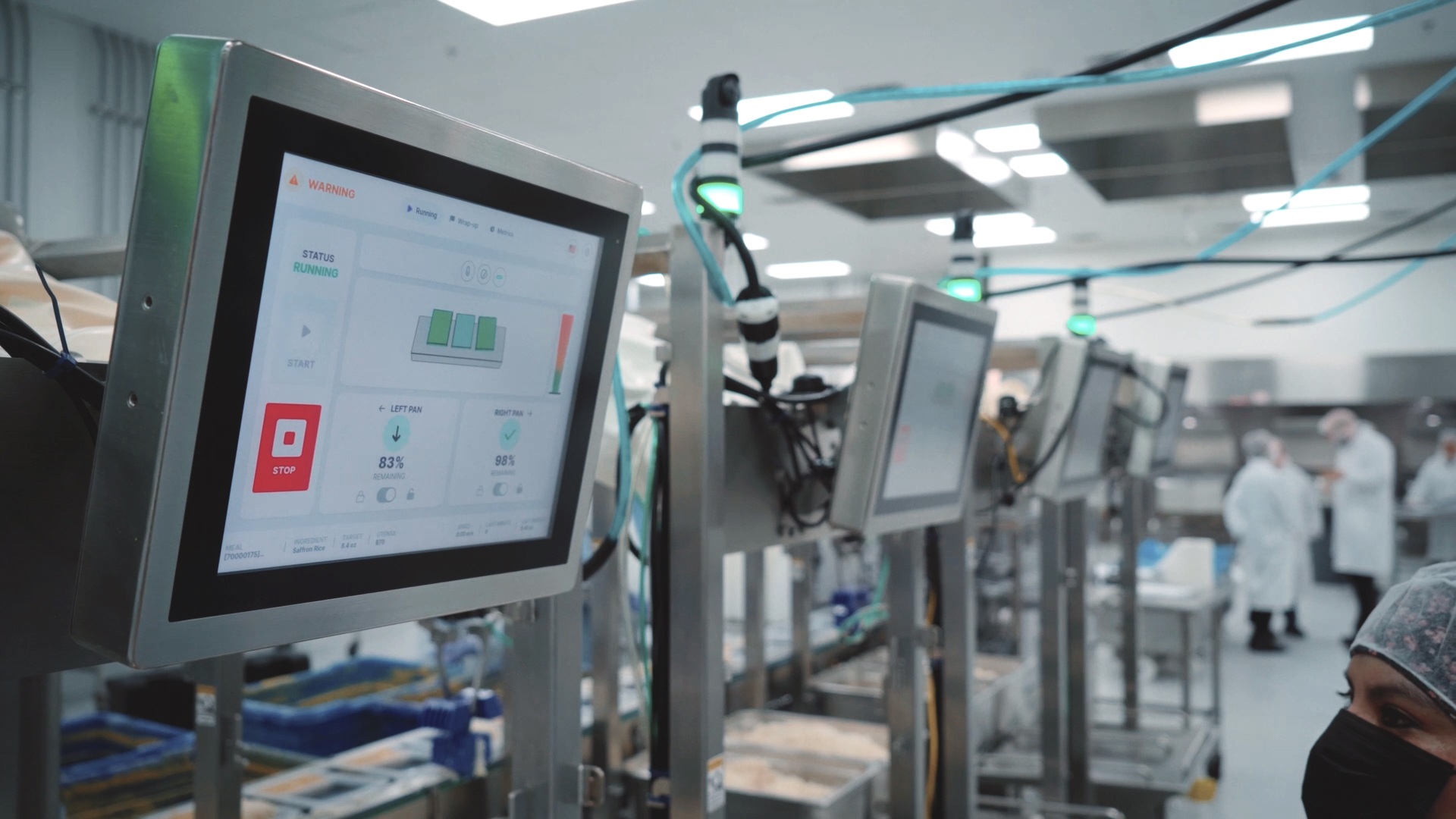
Food manufacturers such as Cafe Spice, Amy’s Kitchen, and Chef Bombay have adopted Chef Robotics’ RaaS solution to automate high-mix meal assembly in a flexible way. While other parts of fresh and frozen meal production are relatively easy to automate with traditional solutions, meal assembly has historically been too variable and high-mix for traditional machines to handle. Chef Robotics offers robots powered by physical AI that can handle hundreds of ingredients across thousands of meals and be moved from one workstation or production line to another in as little as five minutes. Our robots adapt easily to changes in portion sizes, recipes, trays, and inserts, as well as to downstream equipment such as conveyors, denesters, and tray sealers.
What’s next for RaaS
As physical AI models become more capable and generalized, robots will handle an increasingly wide range of tasks, moving beyond constrained use cases toward flexible, multi-purpose automation that can adapt to whatever a production floor needs.
In the near future, RaaS solutions will expand from specific use cases like meal assembly to other high-touch, high-variability steps in the production process, such as quality control. As RaaS deployments scale and AI models are trained on more real-world data, the gap between what robots can handle and what requires human intervention will continue to narrow.
In the long-term, RaaS will bring automation within reach for a much wider range of companies. For the food industry, RaaS won’t just serve large food manufacturers but also mid-size businesses and smaller commercial kitchens and restaurants that have historically been unable to adopt automation solutions due to company size or budget constraints. The subscription model removes the biggest barrier to entry, and as the technology matures, the case for RaaS will only get stronger.
Interested in learning more about RaaS? Contact our team!